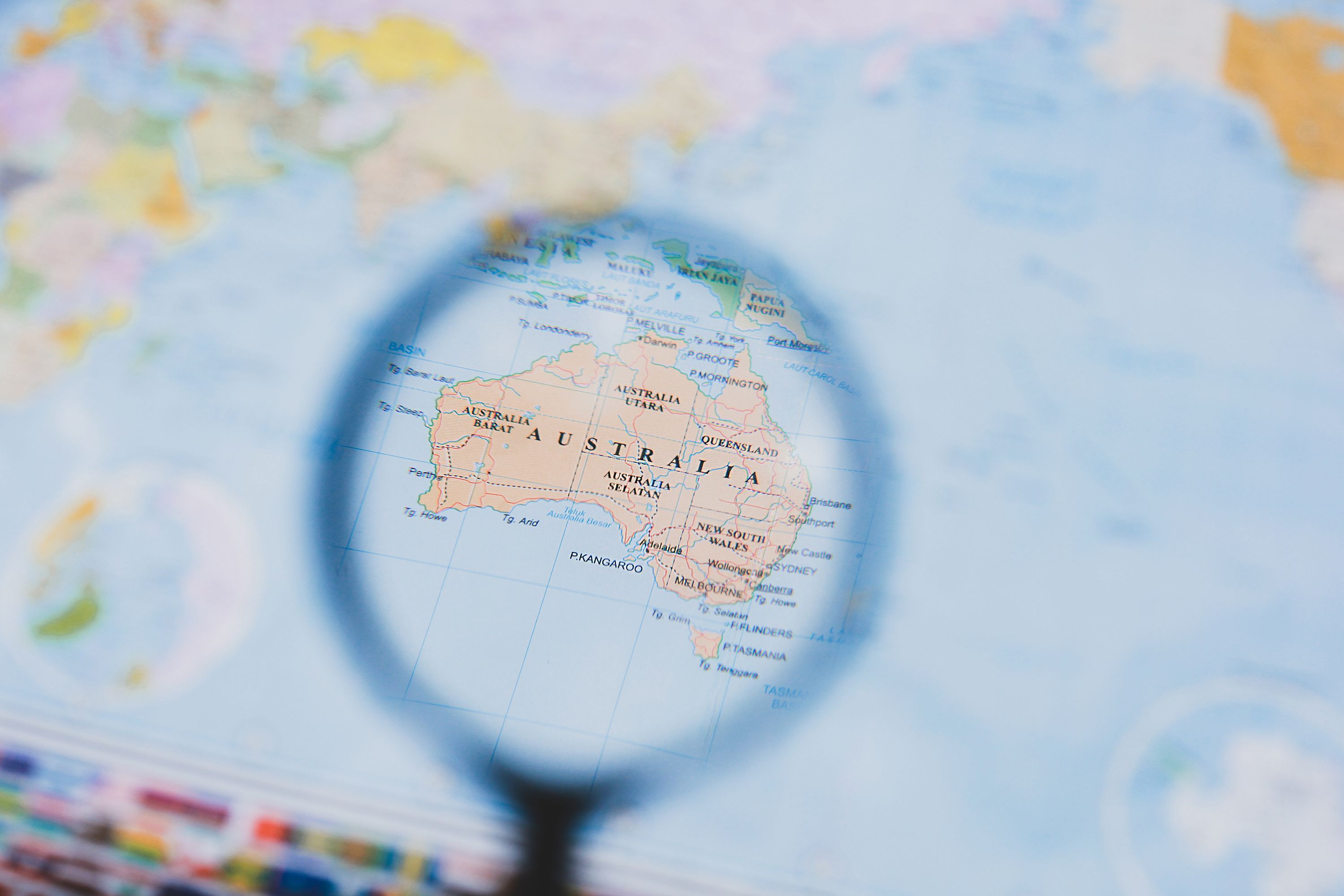
Make studying your master's in Australia possible with Prodigy Finance
Apply for your international student loan with us and finance your postgraduate degree at one of the leading Australian universities
Why study in Australia?
Australia combines globally ranked universities, some of the world's most popular student cities and a graduate work visa for after your degree. Nine Australian universities rank in the top 100 of the QS World University Rankings 2027, including the University of Sydney (28th), the Australian National University (29th) and Monash University (31st). In the QS Best Student Cities 2027, Melbourne ranks 4th in the world and Sydney joint 5th.
Getting the funding together is often the hardest part. With Prodigy Finance you can apply for an international student loan to cover tuition and living costs, with no co-signer or collateral required.
Australia at a glance
| Topic | Australia in 2026 |
|---|---|
| Proof of funds (single student, per year) | AUD 29,710, plus AUD 10,394 for a partner and AUD 4,449 for each child |
| Student visa fee (subclass 500) | AUD 2,500 from 1 July 2026, up from AUD 2,000 |
| Graduate visa fee (subclass 485) | AUD 5,750 from 1 July 2026 |
| Master's tuition | Typically AUD 35,000 to 60,000 a year (RMIT 2026 fee data) |
| Post-study work rights | 2 years after a bachelor's or coursework master's, 3 years after a research master's or PhD |
| Work while studying | Up to 48 hours a fortnight in term, unlimited hours in scheduled breaks |
| Main intakes | Semester 1 (February or March) and Semester 2 (July). A smaller Semester 3 intake runs from September to November at some universities |
| Prodigy Finance loans | Tuition and living costs*, no co-signer, no collateral |
See what your loan could cover
Use our loan calculator to estimate what you could borrow and what repayments would look like before you commit to a school.
What changed in Australia in 2026
Higher visa fees from 1 July 2026
Australia raised its visa application charges on 1 July 2026. The Student visa (subclass 500) now costs AUD 2,500, up from AUD 2,000, and the Temporary Graduate visa (subclass 485) costs AUD 5,750. Eligible citizens of ASEAN countries, Pacific Island countries and Timor-Leste pay a lower student visa charge of AUD 2,050.
| Visa | Before 1 July 2026 | From 1 July 2026 |
|---|---|---|
| Student visa (subclass 500) | AUD 2,000 | AUD 2,500 |
| Temporary Graduate visa (subclass 485) | AUD 4,600 | AUD 5,750 |
Budgets built before July 2026 need rechecking: the student visa is AUD 500 higher and the graduate visa AUD 1,150 higher.
Rules from 2024 that still apply
The Temporary Graduate visa gives 2 years after a bachelor's or coursework master's and 3 years after a research master's or PhD. Hong Kong and BNO passport holders can stay for 5 years.
The age limit for the Temporary Graduate visa is 35, or under 50 for research master's and PhD graduates and Hong Kong or BNO passport holders.
The English requirement is an overall IELTS score of 6.5 (or equivalent), and test results are valid for 1 year.
The Genuine Student requirement replaced the Genuine Temporary Entrant requirement for student visa applications lodged on or after 23 March 2024.
The proof of funds for a single student is currently AUD 29,710 a year, unchanged since May 2024.
Sources: Home Affairs, Post-Higher Education Work stream; IDP, Australian visa fee increases from 1 July 2026; Study Australia, Temporary Graduate visa; Home Affairs, Genuine Student requirement.
What studying in Australia costs
Tuition is the biggest variable. RMIT's 2026 fee data puts master's degrees at AUD 35,000 to 60,000 a year, with its MBA at AUD 50,880. Living costs add roughly AUD 30,000 to 45,000 a year in Melbourne, and the student visa asks you to show at least AUD 29,710 of that.
Tuition: what you'll pay
These are examples from one university. Fees vary by university and programme, so check your own course.
| Programme at RMIT | 2026 annual fee (indicative) |
|---|---|
| Master's degrees, typical range | AUD 35,000 to 60,000 |
| Master of Business Administration (MBA) | AUD 50,880 |
| Master of Finance | AUD 48,960 |
| Master of Physiotherapy | AUD 53,760 |
| Master of Writing and Publishing | AUD 43,200 |
Monthly and annual living costs
| Cost | Amount |
|---|---|
| Visa living-cost minimum, single student | AUD 29,710 a year |
| Living expenses in Melbourne | AUD 30,000 to 45,000 a year |
| Rent, one-bedroom flat in metropolitan Melbourne | Median AUD 500 a week. Sharing a house costs less |
| Food and eating out | AUD 150 to 250 a week |
| Public transport | AUD 30 to 60 a week |
| Phone and internet | AUD 15 to 30 a week |
The visa minimum is a floor, and your real costs depend on your city and housing. Sydney and Melbourne run higher than smaller university towns. Study Australia's cost of living calculator estimates living costs for your state and lifestyle.
One-off costs to budget for
| Cost | Amount |
|---|---|
| Student visa application | AUD 2,500 from 1 July 2026 |
| Overseas Student Health Cover (OSHC), single | AUD 590 to 750 a year, and you need it for the whole visa |
| Student Services and Amenities Fee (SSAF) | Up to AUD 373 a year, billed separately to tuition |
| English language test | Roughly AUD 310 to 490 (IELTS, PTE or TOEFL) |
| Temporary Graduate visa, after you finish | AUD 5,750 from 1 July 2026 |
What money do you have to show for an Australian student visa?
For a Student visa (subclass 500), Home Affairs currently requires a single applicant to show AUD 29,710 for 12 months of living costs. Add AUD 10,394 a year for a partner and AUD 4,449 a year for each child. You also need to show your first year of tuition and your travel costs.
Home Affairs reviews these figures periodically, so check the current amount before you apply.
What counts as evidence
Bank statements that show the funds are genuinely available to you
A scholarship letter stating the amount and duration
Education loan documentation, such as a Prodigy Finance loan letter, alongside your other evidence
A letter of financial support from a parent or partner, with evidence of their income
Common mistakes
A large deposit shortly before you apply. It can look as if it was arranged to pass the visa check.
Counting part-time earnings you haven't earned yet. Assessors generally don't count future income.
Treating AUD 29,710 as a budget. It's the visa minimum, and living costs are often higher.
Source: Home Affairs, Student visa (subclass 500).
How do you fund a master's in Australia without a co-signer or collateral?
Prodigy Finance lends to international master's students on your future earning potential, not your assets. No co-signer, no collateral, and no Australian credit history or guarantor needed. Our student loans cover tuition and living expenses, with interest rates from 10.90%*. Since 2007, we've disbursed $2.6 billion across 47,000 loans.
Where your money goes
Tuition is paid directly to your school, and living costs are disbursed to you directly, so your funding is secured early and you can focus on your move and your studies.
From application to your first disbursement
Check your eligibility online. It takes a few minutes and doesn't affect your credit score.
Submit your application with your offer letter and supporting documents.
Our team reviews your application and confirms your loan amount.
You accept your loan offer and complete verification.
We issue your loan letter, which you can use as part of your visa application.
Once your student visa is approved and your programme starts, tuition is paid to your school.
Living cost instalments begin according to your programme's payment schedule.
What students say
“With Prodigy Finance’s help, I am finally pursuing my Master’s in Data Science in Australia. The future feels full of opportunities.”
William Babu B, Andhra Pradesh, India
Wondering if you're eligible?
You don't need an offer letter to check. See if you can apply in minutes.
Which Australian institutions are best for a master's?
Australia has several universities ranked among the world's best. In the QS World University Rankings 2027, the University of Sydney ranks 28th globally, followed by the Australian National University (29th), Monash University (31st), the University of Western Australia (77th) and the University of Technology Sydney (87th). Melbourne ranks 4th and Sydney joint 5th for students in the QS Best Student Cities 2027.
Taught or research master's?
Whether a programme is coursework (taught) or research-based matters at least as much as overall ranking.
A taught master's involves lectures, seminars and set modules, and suits students working towards a specific career. It's assessed through exams, assignments and sometimes a mini-thesis.
A research master's (often called an MRes) involves far more independent study. You work on a research project with a supervisor and submit a dissertation, which suits students aiming for a PhD or an academic career.
The choice also affects your post-study work rights: coursework master's graduates get 2 years, research master's graduates get 3.
Popular with Prodigy Finance students
Monash University, in Melbourne, is a member of the Group of Eight and ranks 31st in the world. It's known for its research excellence and global footprint, with postgraduate programmes across multiple campuses in Australia and internationally.
Queensland University of Technology (QUT), in Brisbane, has a strong focus on industry connections, with internships and collaborative projects with industry partners. It offers postgraduate programmes in business, engineering, health, law, science and the creative industries.
Universities Prodigy Finance may be able to fund
Does Prodigy Finance support your university?
We support postgraduate programmes at a wide range of Australian universities. New schools are added regularly, so it's worth checking the full list.
Getting into an Australian master's programme
Most Australian universities run two main intakes for postgraduate study: Semester 1, starting in February or March, with the widest range of courses, and Semester 2, starting in July. A smaller Semester 3 intake, opening anywhere from September to November depending on the university, is available for a select number of courses.
What you will need
Requirements vary by school and programme, but most postgraduate applications ask for:
A completed undergraduate degree (or equivalent) from a recognised institution, with transcripts
A statement of purpose or letter of motivation, and letters of recommendation
High-level English proficiency through IELTS, TOEFL or PTE Academic
GRE or GMAT scores for many business programmes and some others
Extras for some courses, such as work experience, a portfolio, an audition or an interview
Your Confirmation of Enrolment (CoE) once you've accepted your offer, which you'll need for your visa application
Meeting character and health requirements, and holding Overseas Student Health Cover (OSHC) for the length of your student visa
Your timeline
| Step | When |
|---|---|
| Research programmes and entry requirements | 12 to 18 months before start |
| Take language and standardised tests | 9 to 12 months before start |
| Request references and prepare documents | 8 to 10 months before start |
| Submit applications | 6 to 10 months before start |
| Receive offers, accept and pay your deposit | 3 to 6 months before start |
| Receive your Confirmation of Enrolment (CoE) | Shortly after accepting your offer |
| Apply for your Student visa (subclass 500) | As soon as you have your CoE |
| Arrange funding and evidence of funds | Alongside your visa application |
| Arrive in Australia | 2 to 4 weeks before your programme starts |
Sources: Study Australia, postgraduate qualifications; Study Australia, Overseas Student Health Cover; university admissions pages.
Your Australian student visa, step by step
Most international students apply for the Student visa (subclass 500) once their university has issued a Confirmation of Enrolment (CoE). The application charge is AUD 2,500 from 1 July 2026.
The documents you will need
A valid passport
Your CoE for a registered course
Your Genuine Student responses
Evidence of financial capacity (see the proof of funds section above)
Overseas Student Health Cover for the length of your visa
English test results, where required
Health examinations, police certificates and biometrics, if requested
The Genuine Student requirement
Home Affairs assesses whether you genuinely intend to study in Australia, based on your circumstances at home, your study plans, the value of the course to you and your immigration history. It replaced the Genuine Temporary Entrant requirement for applications lodged on or after 23 March 2024. Give specific answers and back them with evidence, because generic statements are a common reason for refusal.
Sources: Home Affairs, Student visa (subclass 500); Home Affairs, Genuine Student requirement.
Can international students work in Australia?
Yes. On a Student visa (subclass 500) you can work up to 48 hours a fortnight while your course is in session, and unlimited hours during scheduled course breaks, without a separate work permit. Check the conditions on your own visa, since work rights can vary by circumstance.
International students get the same minimum wage as other workers: AUD 26.44 an hour from 1 July 2026, or AUD 33.05 an hour for casual employees.
Sources: Home Affairs, Student visa (subclass 500); Fair Work Ombudsman, minimum wages.
Can you stay in Australia after your master's?
Yes. After your degree you can apply for the Temporary Graduate visa (subclass 485), Post-Higher Education Work stream, which lets you live and work in Australia. The application charge is AUD 5,750 from 1 July 2026.
| Qualification or stream | Length of stay |
|---|---|
| Bachelor's degree or coursework master's | 2 years |
| Research master's or PhD | 3 years |
| Hong Kong and BNO passport holders | 5 years |
| Second Post-Higher Education Work stream | 1 to 2 extra years if you studied and lived in a designated regional area. The application charge is AUD 2,265 |
Who can apply
You must be 35 or under when you apply, or under 50 if you hold a research master's or PhD, or a Hong Kong or BNO passport
You need an overall IELTS score of 6.5 (or equivalent), and the result is valid for 1 year
You apply within six months of finishing your course
From there, many graduates explore skilled occupation lists, points-tested skilled visas, or state and territory nomination programmes, which can lead toward permanent residence. Post-study work rights give you time to explore these options. They don't guarantee a particular outcome.
Sources: Home Affairs, Post-Higher Education Work stream; Home Affairs, Second Post-Higher Education Work stream; Study Australia, Temporary Graduate visa.
Ready to apply?
You've done the research. Apply now, with no co-signer* or collateral required, to get a provisional offer you're not locked into.
FAQ
Questions about studying in Australia
How much money do I need to study a master's in Australia?
How much does the Australian student visa cost in 2026?
What changed with Australia's student and graduate visas?
When are the main intakes for Australian universities?
How much does a master's degree cost in Australia?
Can I work while studying in Australia?
Can I stay in Australia after I graduate?
What's the difference between a coursework and a research master's?
Do I need a GMAT or GRE score?
What is the Genuine Student requirement?
What's the difference between a student visa and a Confirmation of Enrolment?
Questions about our loans
Does Prodigy Finance require a co-signer or collateral?
How is my loan paid out?
Which Australian universities does Prodigy Finance fund?
Can I use a Prodigy Finance loan letter as evidence of funds for my student visa?
How long does a Prodigy Finance application take?
Does the 2026 visa fee increase change how much I need?